8 MINUTE READ
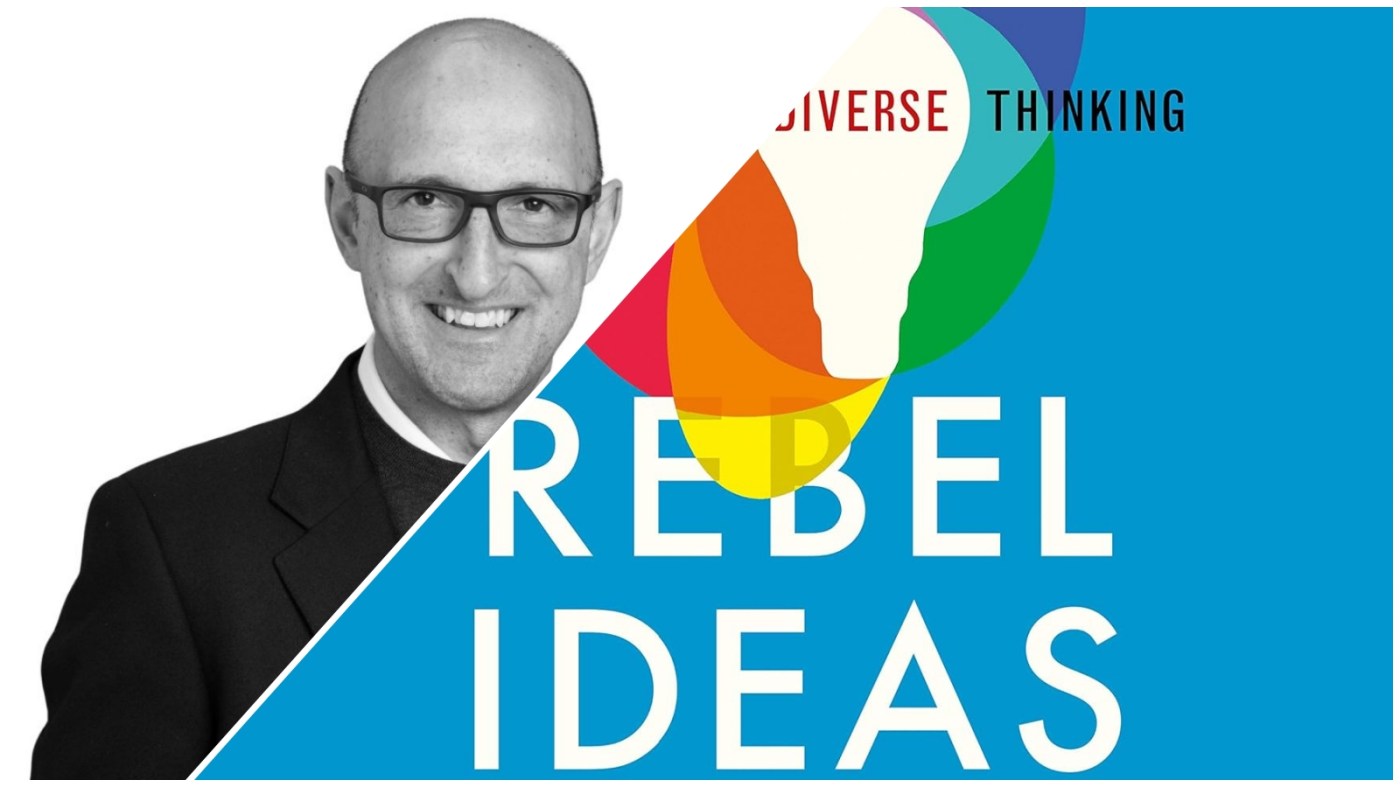
We might feel safe and comfortable surrounded only by people like us. But, says Matthew Syed in his book Rebel Ideas, that can put us at a disadvantage, make our companies less competitive and might even kill us. Cross-cultural advocate and author Yang-May Ooi shares her review of this thought-provoking book that urges all of us to think differently and across cultures.
Outsider Thinking as a Superpower – Rebel Ideas by Matthew Syed | Book Review
In life, business and organisations, it can feel comfortable when everyone is just like us. It’s easy if we all think alike, have similar political views and don’t really ever disagree. It’s even easier if we like the same food, share the same tastes in how we dress and the things we like to do. We never need to feel uncomfortable, triggered, offended or challenged.
But we also never get the chance to grow or innovate. We are likely to fall behind our competitors. We might be easily out-smarted by those who oppose us. And we might even find ourselves unable to get out of danger’s way.
Cognitive Diversity
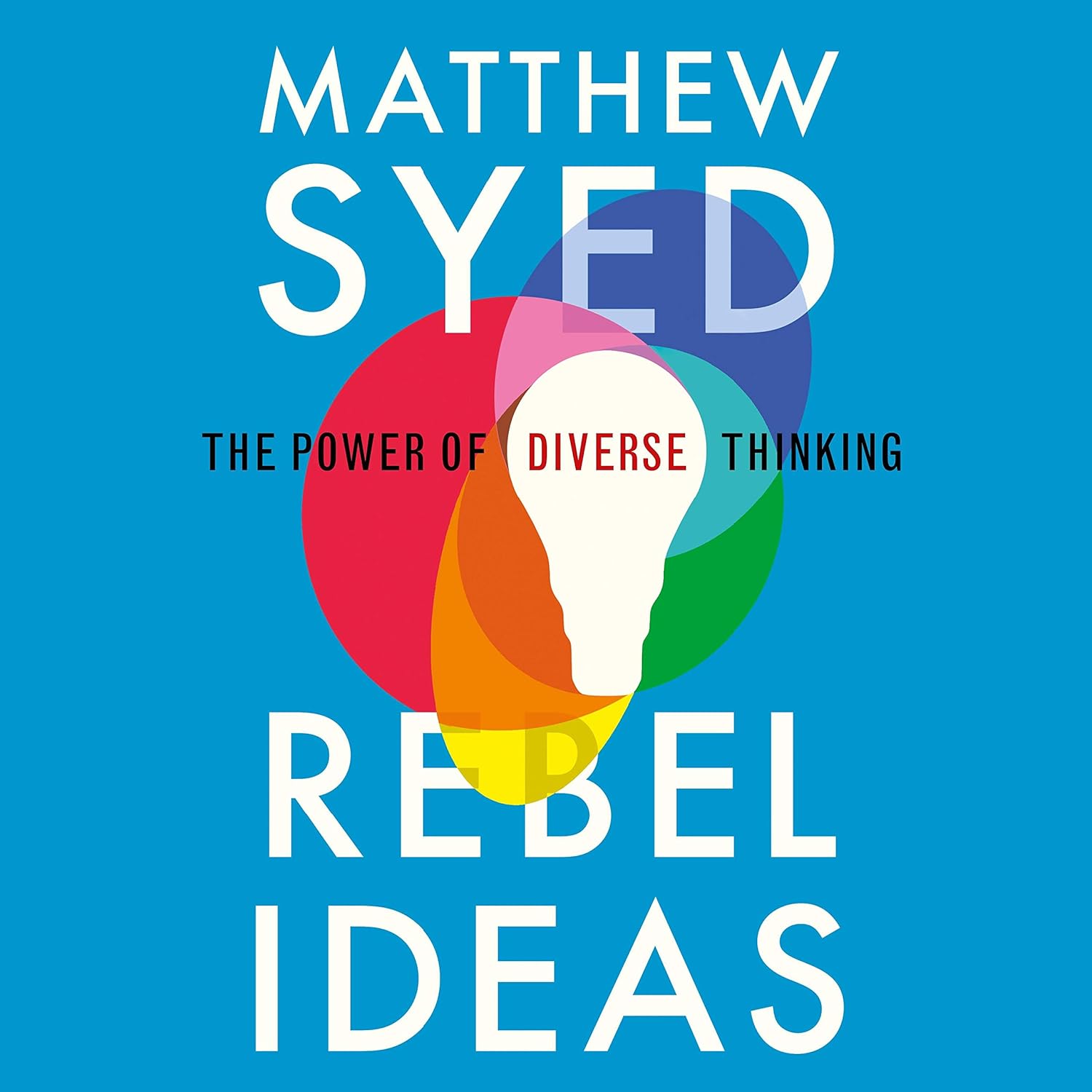
Matthew Syed’s book Rebel Ideas is a wake-up call to those of us who imagine that our world would be a better place if it were exclusively filled with “people like us”.
Rebel Ideas is about “cognitive diversity” – that is, thinking differently from the received wisdom around you. Syed writes in an easy to read style, explaining psychological, social and economic research in a way that an ordinary person like me can follow. His case studies read like thrillers in some places and each story makes a powerful point to illustrate the evidence-based research.
Diversity can be a Secret Weapon
The book opens with the failure of the CIA and FBI to prevent the 9/11 attacks. Syed goes through the background leading up to the fateful day. There had already been alerts sent out across the security agencies that a plane might be a scenario for a terrorist attack. The flight schools that trained the terrorists had already alerted the agencies about the men’s suspicious behaviour. Bin Laden had made a pronouncement that something might happen in the months leading up to the attack. The main reason cited for the failure to join the dots was inter-agency communication and trust issues.
Syed goes on, however, to say that while that was part of it, another aspect was the homogeneity of the CIA and security agencies – they were mostly white, middle-class, Ivy League men living within their privileged, Christian-based, Western democratic bubble. He writes that if there had been more diverse teams comprising Muslims, they would not so easily have dismissed Bin Laden’s desert cave enclave as the hideout of an unsophisticated rabble-rouser with little power nor his poetry format pronouncements as the ravings of a mad man. A Muslim outlook would have seen that Bin Laden was deliberately emulating the desert asceticism of the Prophet and that in Islamic tradition, poetry is seen as a powerful and purposeful form of communication that is to be taken very seriously. As it was, Bin Laden’s followers were often highly-educated deep thinking men with a deep faith and his calls to action moved them to act together in a powerful way. And a more cross-cultural CIA team would have opened out that perspective to the security agency.
A Time to Lead and a Time to Listen
Syed also writes about the disaster on Mount Everest in 1996. The incident was depicted in the film Everest. Two groups of climbers were caught by an incoming storm and eight people died. The leadership on such expeditions is often hierarchical, like in the army, where the lead guide’s word is not to be questioned. Over the course of the climb, the teams were spread out over different parts of the mountain. Climbers at different positions on the mountain saw different perspectives, literally. Some saw the storm coming in. The lead guide did not, based on where he was situated. As Syed analyses it, no-one mentioned the storm to him – either for fear of seeming to question his decisions or because there was an assumption that as all-powerful leader, he was also all-knowing and had factored the storm into his decisions. Unfortunately, he was not and had not and by the time he realised about the storm, it was too late.
Syed goes on to say that analysis of the data relating to mountain climbing disasters shows that the teams from hierarchical societies where juniors are less likely to question their seniors or leaders – such as in Asia – are more likely to experience disaster and deaths in comparison to teams from flatter societies such as Western nations. He argues that this is due to the failure of all team members to speak up at critical points.

.
Syed writes that there are times when hierarchical leadership is the right style and there are other times we need everyone in a team to feel able to speak up – and if we are in a leadership role, we need to be able to listen when they do. We need the adaptability to allow space for cognitive diversity within our own individual selves, whether it relates to leadership or any other behaviour or situation. That takes empathy as well as mental flexibility and good judgement.
Across Hierarchies and Across Cultures
The principles Syed outlines in the Everest story and his 9/11 analysis can be applied across business and organisations – as well as life. Do we as leaders or parents dominate too much? Do we overlook great ideas from more junior team members or a quiet child? Are we blinkered in the way we are approaching a problem? Would a different perspective, especially from someone not at all like us, prove valuable?
Entrepreneurship, Innovation and Migrants
Syed also looks at the data around entrepreneurship and innovation in US companies. Of the 65% of Nobel Prizes for scientific work that have been awarded to US-based researchers over the years, over 50% of recipients were not born in America. Immigrants are also more likely to become entrepreneurs and their companies grow faster and remain in play for longer. 25% of tech and engineering companies have at least one migrant co-founder. Globally, immigrants in 69 countries surveyed were more likely to be entrepreneurs than the native population.
Syed argues that there is something in the outlook and mindset of migrants that gives them the edge when it comes to self-starting energy and innovation: the outsider advantage. They can see different vantage points of the metaphorical mountain. They bring a different cultural way of doing things. They find advantage where someone who has always thought the same way with the same views and same way of doing things fails to.

.
Nations need immigrants for many reasons. Entrepreneurship and innovation seem to me two of the foundations of economic growth and the betterment of society. Is the UK, among others, being foolish in rushing into dismantling such foundations without careful, rational analysis of the data? Are we shooting ourselves in the foot just to pacify some of the electorate’s knee-jerk scapegoating?
There are more thought-provoking case studies in Rebel Ideas. I will leave you to discover them for yourself.
Standing Up Against Safe Sameness
If ever there was a time for us all to recognise and embrace the power of diversity, we are living through it now in our world today.
Rebel Ideas stands up against calls for homogeneity and sameness. It gives us the evidence-based research for bringing together different people from different backgrounds in service of each other and for the greater good of any enterprise, any nation and our world.
I hope this book can spark us all to become advocates for cross-cultural and diverse connections in whatever small way we can – even if it is simply telling one of Syed’s stories or recommending the book to one other person.
–
Links:
Matthew Syed – https://www.matthewsyed.co.uk/
Rebel Ideas – https://amzn.to/49Ggvu0
Everest film – https://www.nationalgeographic.com/adventure/article/everest-the-movie
Photos:
Matthew Syed – https://www.matthewsyed.co.uk/
Rebel Ideas – https://amzn.to/49Ggvu0
Globe montage – https://pixabay.com/illustrations/photomontage-faces-photo-album-1313559/
Subscribe
Subscribe to the convenient monthly newsletter for the latest stories and insights from Belonging Across Cultures and my other creative work. It’s free and will wing its way into your Inbox no more than once a month.
Subscribers will also receive exclusive “goodies” from time to time – like Yang-May’s personal Eat Like a Local Guide to Kuala Lumpur, Singapore and London.

About
Yang-May Ooi is a cross-cultural advocate and author. Her creative work includes novels The Flame Tree and Mindgame and a family memoir & theatre performance Bound Feet Blues. She is also the creator of the podcasts Creative Conversations, The Anxiety Advantage and MetroWild.
Find out more at www.TigerSpirit.co.uk. You can also connect with Yang-May on social media – @TigerSpiritUK.
Belonging Across Cultures explores how we can move from difference to connection to create better lives and a better world. We celebrate Belonging through the different lenses of Food, Music, Landscape and more. Join other curious minds and subscribe to my newsletter here.

Leave a comment