7 MINUTE READ
Cross-cultural author, Yang-May Ooi, celebrates the things that perhaps most British people take for granted in this new occasional series on Belonging Across Cultures. When we are born into and live in a particular culture, what we see, say and do every day is unremarkable to us. But when we have come into a culture as a newbie and learn that culture bit by bit, we can notice its quirks and charms. In this first story, Yang-May notices the delight of a typical Christmas gathering round mince pies and mulled wine.
What I Love about British Culture: Mince Pies and Mulled Wine
In the week before Christmas, I was at a drinks party hosted by a friend and his partner at their house up the hill from us. They were teachers and many of the other guests were from the education world – and this being Oxford, they were all international, super-bright and multi-talented.
It was to mark the end of the Michaelmas term and the start of the festive holidays. A relaxed jumper and jeans affair, there was mulled wine, mince pies and all manner of cheeses laid out and everyone mingling in the sitting room/ dining area.
Openness
Most were school colleagues of the hosts or their friends who already seemed to know each other. I didn’t know many people. In such situations, it can be awkward standing there on your own while others chat happily amongst themselves. But there was an openness about this particular crowd.
They were happy to make eye contact and smiling, opened out a gap in their group to invite me to join them. Similarly, sometimes someone no-one else knew would come up to the conversation I was in and we would turn towards them and welcome them in.
At one point, I saw a grey-haired man standing on his own. He was wearing a bright red silly Christmas jumper. I excused myself from the group I was in and went up to him. He turned out to be the Russian teacher at my host’s school, Mikhail*. We fell into talking about our respective countries where we grew up, Malaysia for me and Russia for him. We compared notes on our impressions of British life, both having lived here for decades.
A Thought-Provoking Conversation
“I love British culture,” I said.
He laughed. “I never heard anyone say they love British culture before! What do you love about it?”
.
.
That stopped me short. I had loved British culture for so long that it felt self-evident that it was lovable. There was no need to itemise the things there were to love, surely – who would question that?
Well, Mikhail for one.
“Um… the language?” I said. “I used to read the dictionary when I was a kid. I just loved all those words, the more multi-syllabic the better. And all the different words for the same thing, synonyms. The dictionary was my treasure trove.”
Mikhail looked unconvinced. I went on “And the subtleties in the way the English speak – the way they say something without actually saying it. It’s all in the tone. That’s a language in itself. And it can take years to get it as a foreigner. Like, well, depending on how you say the word ‘interesting’, you could be totally fascinated or you’re actually saying ‘meh’ or you are being dismissive and quite snarky.”
I didn’t really do a very good job that night at itemising the things in British culture I love.
A List of British Culture I Love
So with time to reflect over the holiday season, I am gathering a list. I plan to write up the items on that list from time to time here in the Belonging project. Because these are the things about British people and culture that were once alien to me as a newcomer to the country but which now seem to be part of my DNA, part of my sense of Belonging here, my chosen home.
To start with, I should have said to Mikhail, “Look around us. This is an aspect of British culture I love.”
One of Many Christmas Traditions
The dress code was warm, cuddly jumpers, some of them silly like his. Because it was Christmas and that’s what we do.
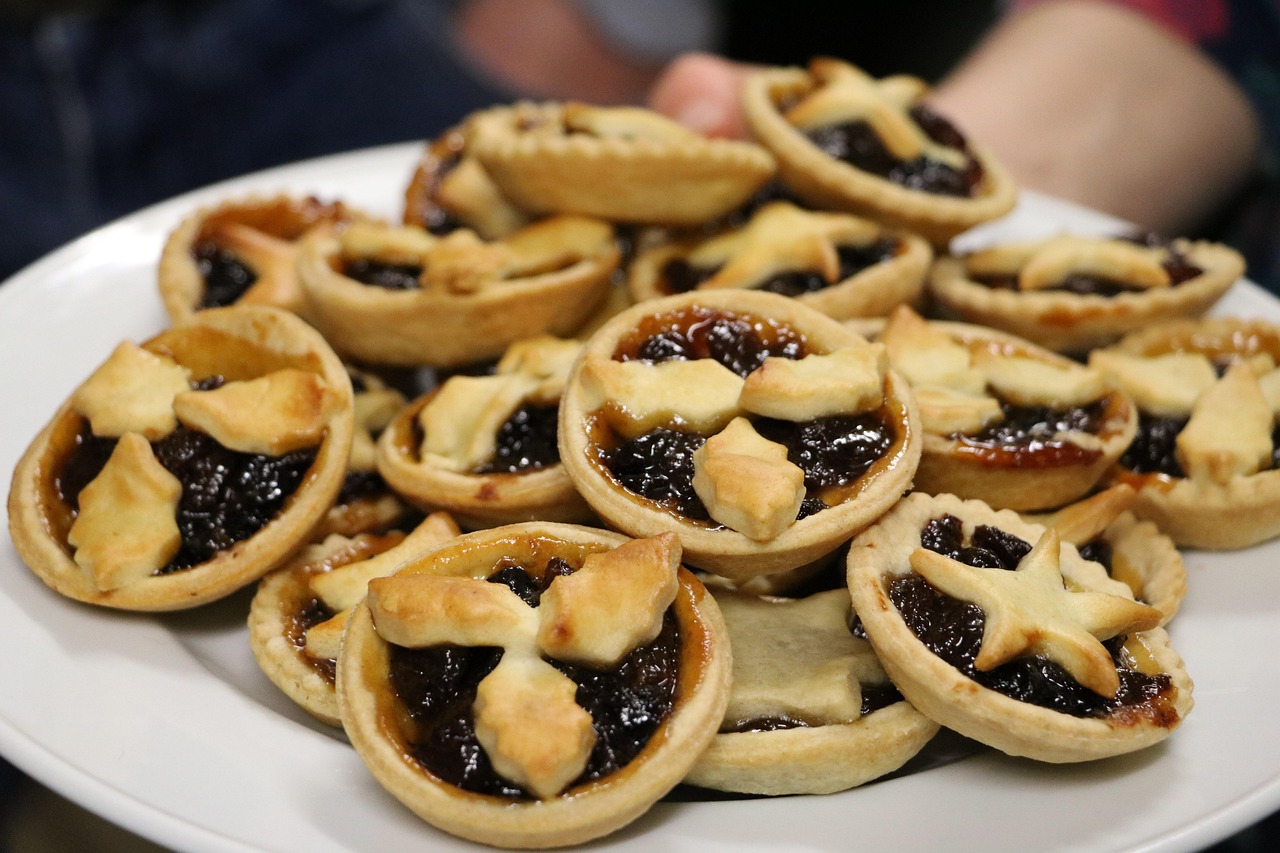
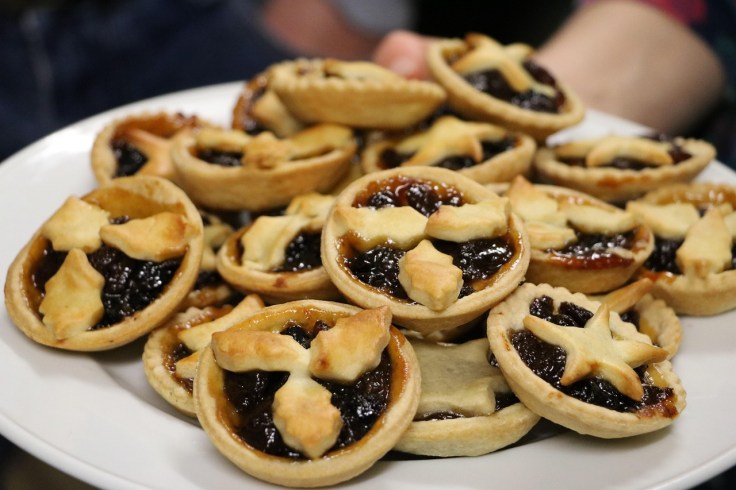
The foundation of all British Christmas drinks gatherings is mince pies and mulled wine. Everyone tucked in to the mince pies happily. Mince pies have no meat but is a sweet, tangy mix of currants, suet, spices like cinnamon and nutmeg, soaked in brandy – all cupped in short crust pastry with a pastry hat on top. Mulled wine, evolved from German gluhwein, flowed – a warm punch made with red wine, cloves and other spices and citrus fruit. For non-drinkers, there was the staple elderflower cordial.
There was cheese, always a cheddar, a blue, something runny like camembert as a basic offering, with other styles of cheese a bonus. It is cheese because the hosts are not catering a proper meal but it is understood we need to have something savoury and potentially filling. There were crackers – a range from one of those mult-style tins of savoury biscuits. And a sliced up baguette for those who were particularly hungry.
.
.
Grapes, of course, to go with the cheese – and satsumas because that’s what we always have at Christmas. Crisps, too – not a weird flavour but one of the three standard ones: plain salt, salt and vinegar or cheese and onion. Sometimes hosts might also offer pate or cold meats.
Everything could be eaten standing up with one hand – the other holding our drinks – or if absolutely necessary, gathered from the buffet table onto a small plate.
Carols!
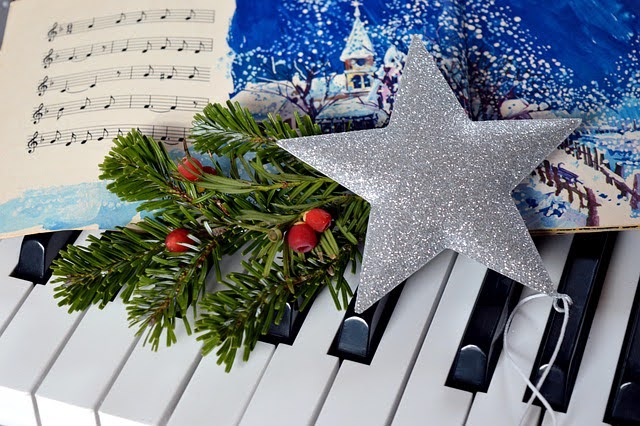
As this was Christmas drinks, our hosts passed round sheets of music which we shared, two or three of us together. Carols! Every now and then, they would pause us in our chatter, usher their musical friend to the piano and we would all belt out mightily a Christmas carol.
Delightfully – and not surprisingly – there were bass voices and sopranos who would improvise the many different parts of some carols, filling the little living room with rich, resonant tuneful spine-tingling enchantment, especially with the descant of Hark, the Herald Angels. And everyone divided naturally and with gusto for Good King Wenceslas, the men macho-ly portraying the deep voiced king and the women piping away as the young boy.
And then we would return to our conversations with a glow in our faces and a sparkle in our eyes – until the next interlude of jolly singing.
What’s not to love?
What do you love?
Is there an aspect of British culture you love? I hope you’ll share it with me. Add a comment below or send me a message via the Contact page. Or just chat about it with your friends or family. What do they love about British culture?
–
*name and details changed for privacy
—
Photo:
Image by darianstibbe from Pixabay
Image by Frauke Riether from Pixabay
Subscribe
Subscribe to the convenient monthly newsletter for the latest stories and insights from Belonging Across Cultures and my other creative work. It’s free and will wing its way into your Inbox no more than once a month.
Subscribers will also receive exclusive “goodies” from time to time – like Yang-May’s personal Eat Like a Local Guide to Kuala Lumpur, Singapore and London.

About
Yang-May Ooi is a cross-cultural advocate and author. Her creative work includes novels The Flame Tree and Mindgame and a family memoir & theatre performance Bound Feet Blues. She is also the creator of the podcasts Creative Conversations, The Anxiety Advantage and MetroWild.
Find out more at www.TigerSpirit.co.uk. You can also connect with Yang-May on social media – @TigerSpiritUK.
Belonging Across Cultures explores how we can move from difference to connection to create better lives and a better world. We celebrate Belonging through the different lenses of Food, Music, Landscape and more. Join other curious minds and subscribe to my newsletter here.

Leave a comment