Yang-May Ooi, cross-cultural advocate and author, shares another vignette from her dinner with an international mix of friends the other evening about their favourite foods from home. A menu item evokes the history of East Germany, Unification and an individual story of migration and connection to one’s roots.
A Taste of East Germany
—
Eight of us had gathered around the table at Moya, an Eastern European restaurant in Oxford. We were a diverse mix of British friends – four English, one Irish, and the rest of us originally from France, Germany, and Malaysia. In the heart of this quintessentially English city, our conversation drifted to our favorite dishes from home.
For the previous story in our foodie conversation at dinner, you can read about Laura’s favourite dish in It’s Easy to Stereotype.
–
From East to West
Hanna* was looking through the menu when she smiled in delight. “Slovenian dumplings with damson jam!”
“Are they special?” I asked.
Hanna had grown up in East Germany and she explained that the transition to a united country after the fall of the Berlin Wall had been difficult for many East Germans, her family included. The different social and political structures as well as different values and ways of doing things between East and West had been a shock – especially as the change had been so sudden. East Germany had had more in common with the Eastern Bloc – especially the Soviet Union – and other Eastern European countries than with the West.
Sweet fruit filled dumplings had been one of her family’s favourite foods when she was growing up. The dish was very similar to dumpling dishes across the border in the likes of Poland, Czechoslovakia and Slovenia.
A Family Recipe for Happiness
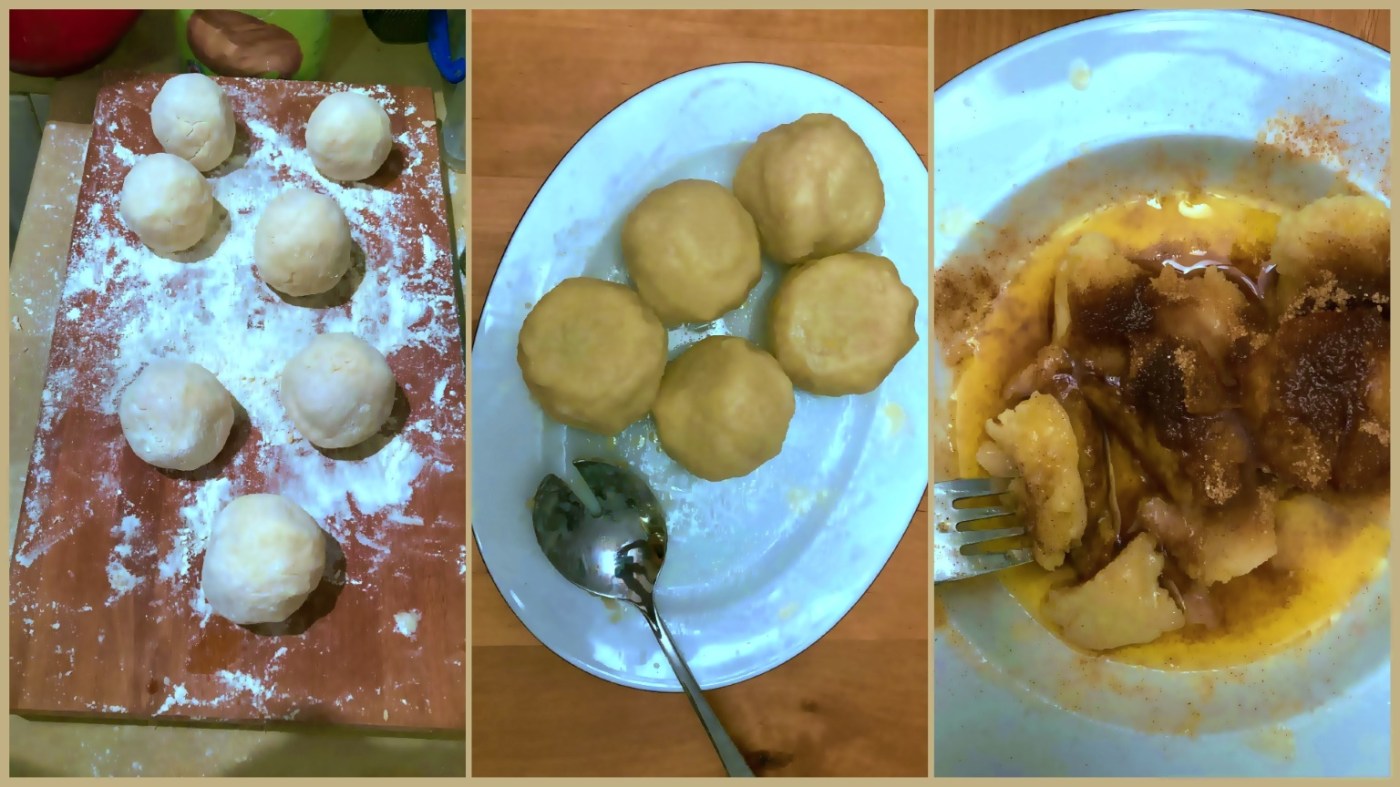
As Hanna told me about how she loved these dumplings from her childhood, her face lit up from the memory. She talked about making the potato dough and rolling it in her hands to form the dumplings. “We use this special plum – it’s too sour to eat on its own but fantastic when you cook it. It’s called Zwetschen in German. In English, I think it is damson plum.”
She was beaming and I felt that I was with her back in an apartment in East Germany, the kitchen windows steamed up from the heat of the cooking, a young girl and her mother with floury hands putting together the plum-filled dumplings.
“I still make these dumplings,” Hanna said. She has lived in the UK for almost twenty years. “It’s hard to get the Zwetchen here in the UK but you can sometimes find them in the supermarket. But I have exactly that plum tree in my garden – so it is wonderful! I can pluck my own plums for the dumplings.”
Her children love the dumplings, too. “We have competitions,” she said. “To see who can eat the most. The most was 16 dumplings in one go!”
I laughed, “How big are they?”
“Fist-sized!”
.
.
More than just dumplings
Of course, Hanna had to have the damson dumplings for dessert – and I wanted to try them after hearing her story. We were both stuffed from the main course so we shared a serving: an enormous dumpling drizzled with a sweet poppy seed dressing. My half portion was huge – and delicious, the texture of the dough a cross between mocchi and a Chinese steamed bun, the filling tart and sweet at the same time.
Hanna’s verdict was: “It’s not quite the same as the ones my family make but I’m so happy to have had this.”
I pictured her with her parents and siblings revelling in the dumplings through the challenges of life under the wintery years of communism and making them still during the difficult transition to life in a modern, democratic united Germany. I saw her coming to the UK to build a new life here, watching the plums ripening on her tree in her foreign garden, plucking them and rolling up her sleeves at her English kitchen table to make these dumplings for her children. They are now young adults, English and also German, and I picture them in decades to come making these dumplings still for their children yet unborn, perhaps here in the UK, or back in Germany or in another country still.
–
Coming up next – Hanna and Laura ask me what dish from home I love cooking – I tell them about it in Cultural Recipes: Chinese Soy Sauce Chicken cooked Western-style…
–
*name changed for privacy
Ref: moay
Subscribe
Subscribe to the TigerSpiritUK newsletter for the latest updates, news and insights from Belonging Across Cultures and my other creative work. It’s free and will wing its way into your Inbox no more than once a month.
Subscribers will also receive exclusive “goodies” from time to time – like Yang-May’s personal Eat Like a Local Guide to Kuala Lumpur, Singapore and London.

About
Yang-May Ooi is a cross-cultural advocate and author. Her creative work includes novels The Flame Tree and Mindgame and a family memoir & theatre performance Bound Feet Blues. She is also the creator of the podcasts Creative Conversations, The Anxiety Advantage and MetroWild.
Find out more at www.TigerSpirit.co.uk. You can also connect with Yang-May on social media – @TigerSpiritUK.
Belonging Across Cultures aims to bring people together across cultural and social divides through personal stories. We celebrate Belonging through the different lenses of Food, Music, Landscape and more. Join other curious minds and subscribe to my newsletter here.

Leave a comment